
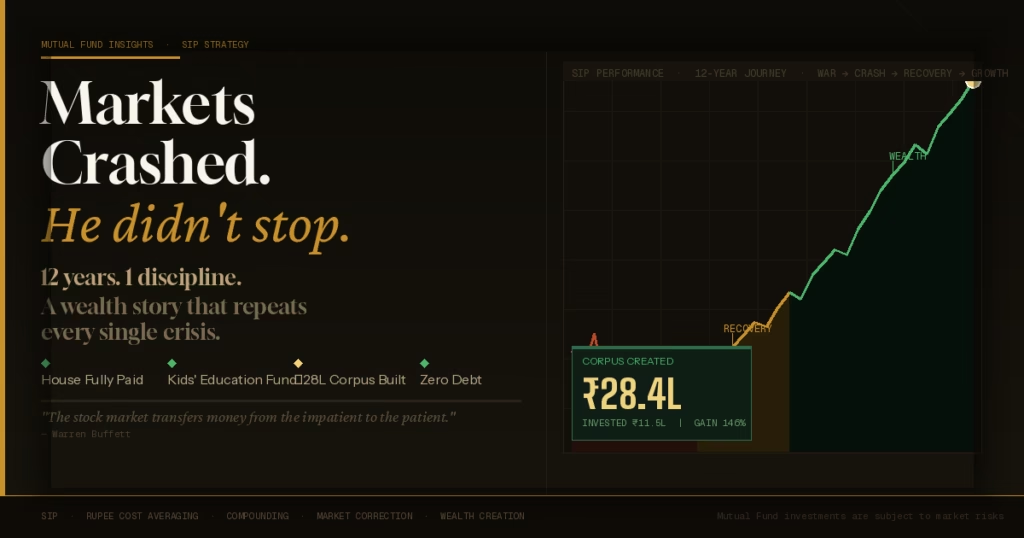
SIP during market crash is the single greatest wealth-building opportunity most investors throw away. While headlines scream about war, geopolitical tensions, and falling markets, the investors who quietly continue their SIP during market crash after crash are the ones who retire wealthy.
A story about war, market crashes, and the investor who won anyway.
Meet someone you probably know — or someone you should become.
“Yaar, markets crash ho rahe hain. War chal rahi hai. Maine SIP band kar di.
Tu abhi bhi bharta hai? Pagal hai kya?” — his colleagues, every crisis
- ₹8,000/month SIP — never missed. Not once. Not during COVID. Not during wars. Not during corrections.
- Corpus built: ₹28.4 Lakhs from just ₹11.5L invested
- Daughter’s college fees — fully funded, zero loan
- Emergency fund intact — 6 months expenses, always
- Zero panic. Zero sleepless nights about markets.
The Hard Truth
Markets Fall. Wars Happen. Wealth Is Built Anyway.
Right now, headlines are screaming. Geopolitical tensions. Border conflicts. Oil prices spiking. Markets correcting 10%, 15%, 20%. Your WhatsApp group is full of “experts” saying stop your SIP, wait for stability, move to FD.
Here is what they don’t tell you: every single crisis in history looked like the end — until it wasn’t.
— Warren Buffett
It feels different. Every time. But India’s markets have survived the Kargil War (1999), the 2001 Parliament attack, the 2008 Global Financial Crisis, demonetisation (2016), COVID-19 (2020), and multiple global conflicts — and recovered stronger each time.
Investors who paused their SIPs during those crashes missed the sharpest recovery rallies. The ones who continued — or even increased — their SIPs bought units at rock-bottom prices and reaped massive rewards.
History as Proof
Why Continuing SIP During Market Crash Builds Long-Term Wealth
The data below shows what happened to investors who continued SIP during market crash events in India’s history.
| Crisis | Market Fall | Recovery | SIP Investor Outcome |
|---|---|---|---|
| Kargil War (1999) | ~25% | 12 months | Accumulated cheap units → Big gains |
| Global Crisis (2008) | ~55% | 24 months | Continued SIPs 2x–3x in 3 years |
| Demonetisation (2016) | ~15% | 6 months | Short dip, swift recovery |
| COVID Crash (2020) | ~40% | 8 months | Best SIP vintage in a decade |
Every correction was an opportunity dressed in fear. SIP is the tool that forces you to buy when everyone else is selling.
The Mechanics
Why SIP Actually Wins During Crashes
That single decision added ₹6 lakhs extra to his corpus.
Action Plan
What You Should Do Right Now
If you have an active SIP: Do nothing. Keep it running. This is your moment — not your moment to quit. If anything, consider a top-up.
If you paused your SIP: Restart today. Not next month. Not “when things stabilise.” Today. Every month of delay is compounding working against you.
If you haven’t started yet: The best time was 10 years ago. The second-best time is today — especially today, when markets are low and every rupee buys more units.
Ramesh’s colleagues who stopped their SIPs during every crisis are still waiting for the “right time.” They’re still renting. Still anxious about their children’s fees. Still planning to “start investing seriously” someday.
Ramesh is drinking chai on the terrace of a house he owns — paid for by the discipline of ₹8,000 a month that he never touched, no matter what the headlines said.
Your SIP Is Your Soldier.
Don’t Pull It Off the Battlefield.
Markets are uncertain. Your financial future doesn’t have to be. Let’s make sure your SIP keeps working — even when the world isn’t.
Starting or continuing your SIP during market crash conditions today is the smartest financial move you can make